
'The disease is we have models that are still based on debt and not equity. And banks are singularly not equipped to lend for longer duration projects, which often take 20 years.'

Before growing 2.8 per cent in latest April-September period, IIP had seen negative growth of 0.1 per cent in 2013-14 period.

Credit growth has slowed down from around 32 per cent (year-on-year) in July 2006 to around 23 per cent in August. Anecdotal evidence suggests that much of the deceleration in growth has come on the back of softer retail credit off-take.
.jpg)
India's share of 2015 emerging market allocations will be driven by FII perceptions on likely growth and reform.

The first economic readings to be published in 2015 will be out on Monday, when the government releases industrial output data for November and the consumer price index for December.

Sentiment was largely positive after April IIP grew at 4.9 per cent, spurred by higher growth in manufacturing and mining sectors.

In the metal pack, Tata Steel was up 3.7% while Vedanta was up 1.8% .

The technical report of the NSSO has generated controversy following its observation that as much as 36 per cent units forming part of MCA-21 database, used in computing GDP, could not be either identifiable or traceable in the field.
On a cumulative basis, the Index of Industrial Production (IIP) for the first quarter this fiscal grew by 10.3 per cent as compared to 7.7 per cent in the year-ago period, according to the official figures released on Friday.

The elections held in April-May 2019 will be an important determinant of future growth and investment.

There is a strong case for 25 basis points cut in interest rates.

Over 93% of the orders in the year came from the central and state governments, PSUs, and NHAI.

Sensex may remain under pressure this week due to weak global factors.

The combination of sanctions, and low fuel prices is really hurting the Putin regime.
Some say the MPC will raise the rate, while others are of the view that there is already de facto interest rate tightening through rising bond yields, which might prompt the central bank to go for a pause.

Indirect tax revenues rose marginally by 5.6 per cent in the April-October period to over Rs 2.85 lakh crore, mainly on account of increase in service tax and customs collections.

Meanwhile, IIP for June was revised upwards to a decline of 1.78 per cent from a provisional 2.2 per cent dip in production. It contracted by 2.8 per cent in May this year.
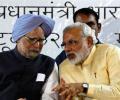
There are actually great similarities between the two PM

Markets under pressure; IT financials grab spotlight.

Macro data have little connect with indicators on the ground.
India Inc has an impressive report card to show for the first quarter of this financial year.

ICICI Bank was the top gainer in the Sensex pack, surging 4.64 per cent, followed by Axis Bank at 3.86 per cent and SBI 2.53 per cent.

Although the current long-term bullish trend is intact, markets are awaiting clarity on the taper and the Assembly election results.

Inflation trajectory does not match the slump in demand, prolonged pause on rates likely.

It is not a good idea to take the line that since demonetisation happened in the third quarter, everything that happened then was a consequence of that, says Chief Statistician TCA Anant.

Index of industrial production data had also shown that the sector grew at 3.1 per cent after contracting in the previous quarters.

Only power generation grew faster in 2014 than in earlier years.

The upbeat earnings from Reliance Industries will set the tone for the truncated week ahead

The GDP always has a base year, which defines the composition of the economy in that year. As the composition changes, the base year needs to be revised regularly. Abhishek Waghmare explains how that is done.

Notable losers were ONGC, Axis Bank, ITC, SBI, ICICI Bank, NTPC, Hero Motocorp, Sun Pharma and Bharti Airtel who fell by up to 2.80 per cent.

They believe that the key reason behind such a high growth rate could be "a steep downward revision" of the year-ago base period.

The estimates of national income and growth do not pass the 'smell test'.
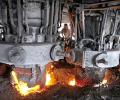
India's industrial output unexpectedly contracted 4.2 percent year-on-year in October, dragged down by a fall in the manufacturing and the capital goods sector, government data showed on Friday.

Expenditure cuts necessitated by slowing revenue growth, weak industrial activity worrisome portents

Like everything else, the structure of banks may change, and banks may depend more on digital technologies and artificial intelligence for dealing with both their customers and employees.

A moderate recovery in Indian factories, exports and investments were probably the main drivers for an increase in overall growth in the quarter through March.

RE of GDP for 2015-16 show that the economy grew 7.9% in 2015-16, rather than the earlier estimate of 7.6 per cent.

The policy statement by the RBI governor is also expected to be upbeat.

RBI in wait and watch mode as several risks to inflation continue to exist including a sudden reversal of food prices and oil price volatility.

Private consumption is looking up and will get better as the full effect of the good monsoon is felt on rural income, and the effect of the payout from the Seventh Pay Commission is felt on urban income, say Anis Chakravarty & Rishi Shah.
